OCD Therapy in Nashville & Middle Tennessee
Evidence-Based Treatment for Obsessive-Compulsive Disorder
If you’re living with obsessive-compulsive disorder (OCD), you already know this isn’t “just anxiety” or something you can logic your way out of. OCD is exhausting, intrusive, and relentless, and it can make even simple moments feel overwhelming.
OCD often targets the things you care about most, which is why working with therapists specifically trained in OCD treatment matters.
At Works Counseling Center, we provide specialized OCD therapy for adults, teens, and children across Nashville, Bellevue, Belle Meade, West Meade, Broadway, Nolensville, Gallatin, Hendersonville, Smyrna, Brentwood, Franklin, and Fairview, as well as virtual OCD therapy across the state of Tennessee.
Our clinicians don’t just understand OCD. We treat it using gold-standard, evidence-based approaches proven to help people get their lives back.
What Is Obsessive-Compulsive Disorder (OCD)?
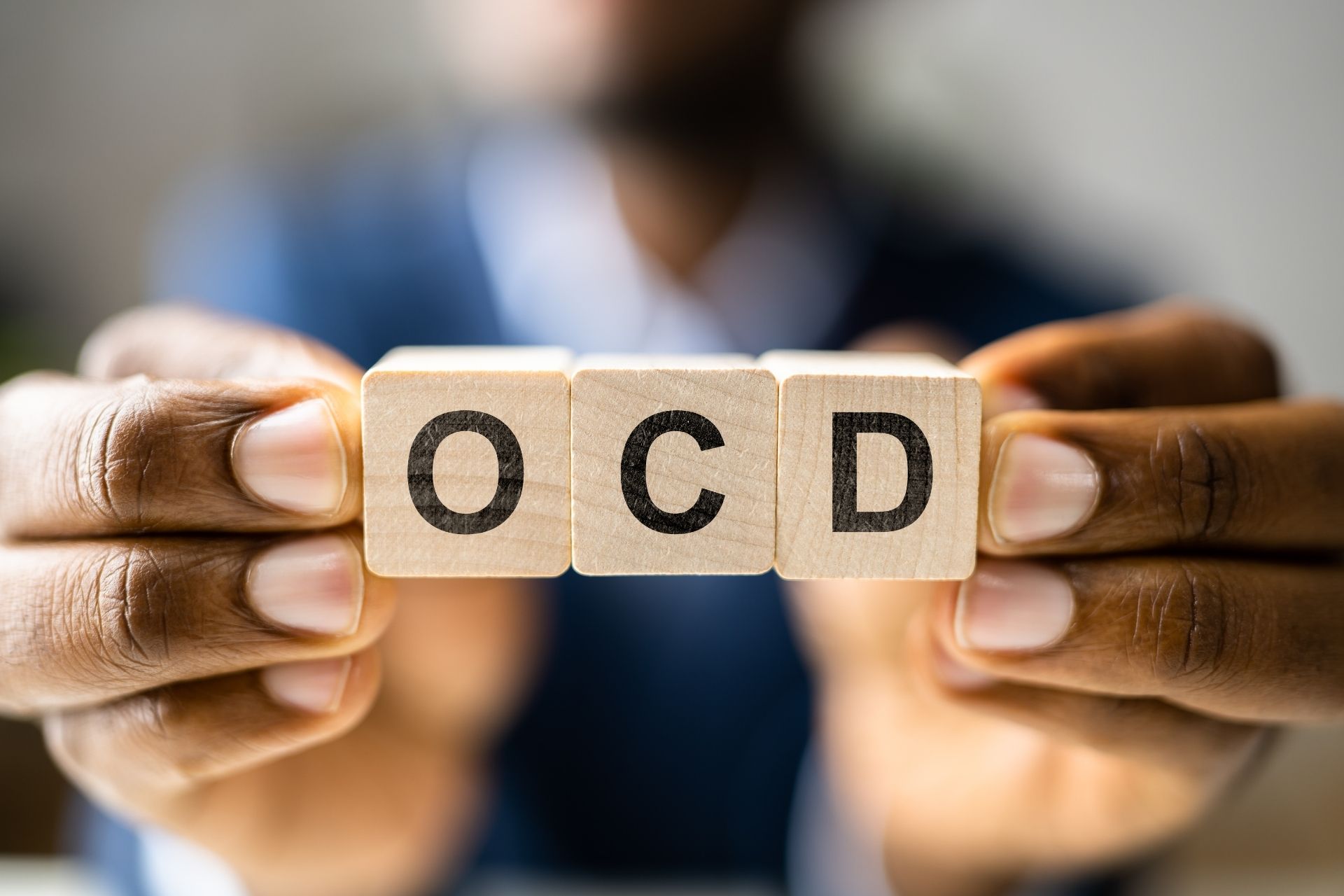
OCD is a mental health condition characterized by:
- Obsessions: intrusive, unwanted thoughts, images, urges, or sensations
- Compulsions: behaviors or mental rituals done to reduce anxiety or prevent feared outcomes
The relief from compulsions is temporary, which keeps the OCD cycle alive. Over time, OCD can interfere with work, school, relationships, parenting, faith, and daily functioning.
OCD exists on a spectrum from mild to severe, and without proper treatment, it often grows stronger rather than fading on its own.
Common OCD Subtypes We Treat
OCD can latch onto almost anything that matters to you. We commonly treat:
- Harm OCD – intrusive fears of causing harm to yourself or others
- Pedophilia OCD (POCD) – unwanted sexual thoughts involving children
- Scrupulosity / Religious OCD – fear of moral failure, sin, or blasphemy
- Contamination OCD – fears related to germs, illness, or spreading contamination
- Somatic OCD – fixation on bodily sensations or health fears
- Sexual Orientation OCD (SO-OCD) – intrusive doubts about sexual identity
- Relationship OCD (ROCD) – obsessive doubt about the “rightness” of a relationship
If you don’t see your experience listed here, that doesn’t mean we don’t treat it. OCD is highly creative, and we are used to meeting it in all its forms.
OCD-Related Disorders We Also Treat
Many clients also experience conditions closely related to OCD, including:
- Skin Picking Disorder (Excoriation)
- Hair Pulling Disorder (Trichotillomania)
- Body Dysmorphic Disorder (BDD)
Is OCD Therapy at Works Counseling Center a Good Fit for You?
Is OCD Therapy at Works Counseling Center a Good Fit for You?
You experience intrusive thoughts that feel disturbing, shameful, or “out of character”
You feel stuck in mental rituals like checking, reviewing, reassurance-seeking, or trying to feel certain
You’ve tried talk therapy before and felt temporarily relieved but not better
You’re willing to feel some discomfort in order to reduce OCD’s control long-term
How We Treat OCD at Works Counseling Center
We specialize in evidence-based OCD treatment, not reassurance, avoidance, or talk therapy that can accidentally make OCD worse.
Because OCD is maintained by reassurance and avoidance, our therapists are intentional about not reinforcing compulsions in session. Instead, we help you learn new ways to respond to anxiety so that OCD loses its power over time.
Exposure and Response Prevention (ERP) is the gold-standard treatment for OCD.
Exposure involves intentionally facing feared thoughts, images, sensations, or situations.
Response Prevention means resisting compulsions, avoidance, or mental rituals.
Over time, your brain learns that anxiety can rise and fall on its own and that feared outcomes do not occur simply because a thought exists.
We use modern ERP approaches rooted in inhibitory learning, helping the brain form new associations rather than trying to eliminate anxiety altogether.
The goal of ERP is not to eliminate anxiety, but to help you live fully even when uncertainty shows up.
Acceptance and Commitment Therapy (ACT) for OCD
ACT is often integrated alongside ERP to help clients:
- Stop fighting thoughts
- Build tolerance for uncertainty
- Reconnect with personal values
- Take meaningful action even when anxiety is present
ACT is especially helpful for clients who feel stuck in constant mental debate or self-monitoring.
Why Clients Choose Works Counseling Center for OCD Therapy
- Specialized training in OCD and ERP
- Therapists who understand intrusive thoughts without judgment
- Treatment that targets the OCD cycle, not just symptoms
- In-person therapy across Middle Tennessee
- Virtual OCD therapy available statewide in Tennessee
We see therapy as a collaborative process. You are not broken. You are responding to fear in a way that makes sense given how OCD works and we help you change that relationship safely and intentionally.
Frequently Asked Questions About OCD Therapy
How long does OCD therapy take?
Treatment length varies based on severity, consistency, and engagement, but many clients notice meaningful changes within the first few months of structured ERP work.
Do you offer virtual OCD therapy in Tennessee?
Yes. We provide virtual OCD therapy to clients located anywhere in Tennessee.
Will ERP make my anxiety worse?
ERP can feel uncomfortable at first, but it is carefully paced and collaborative. The goal is to help anxiety become more manageable, not overwhelming.
Do you treat “Pure O” OCD?
Yes. We treat OCD presentations that primarily involve mental compulsions, rumination, and intrusive thoughts.
OCD Therapy Locations We Serve
We offer OCD therapy in:
Nashville, Bellevue, Belle Meade, West Meade, Broadway, Nolensville, Gallatin, Hendersonville, Smyrna, Brentwood, Franklin, and Fairview, plus online therapy throughout Tennessee.
Ready to Get Started?
You don’t have to keep managing OCD alone.
📍 In-person and virtual options available