Most people know what it feels like to be tired, but burnout goes far beyond ordinary exhaustion. Burnout is a chronic state of emotional, mental, and physical depletion caused by prolonged stress, especially when rest or support is unavailable. It is not a sign of weakness or lack of motivation; it is your nervous system signaling that your current pace or demands have exceeded your internal resources. The World Health Organization defines burnout as an occupational phenomenon, characterized by three dimensions:
- Emotional exhaustion – feeling drained and unable to recover.
- Depersonalization or cynicism – emotional distancing or irritability toward work or others.
- Reduced sense of personal accomplishment – feeling ineffective, unmotivated, or disconnected from purpose.
In therapy, these patterns often show up in subtle ways long before someone realizes they are burned out.
Recognizing the Signs
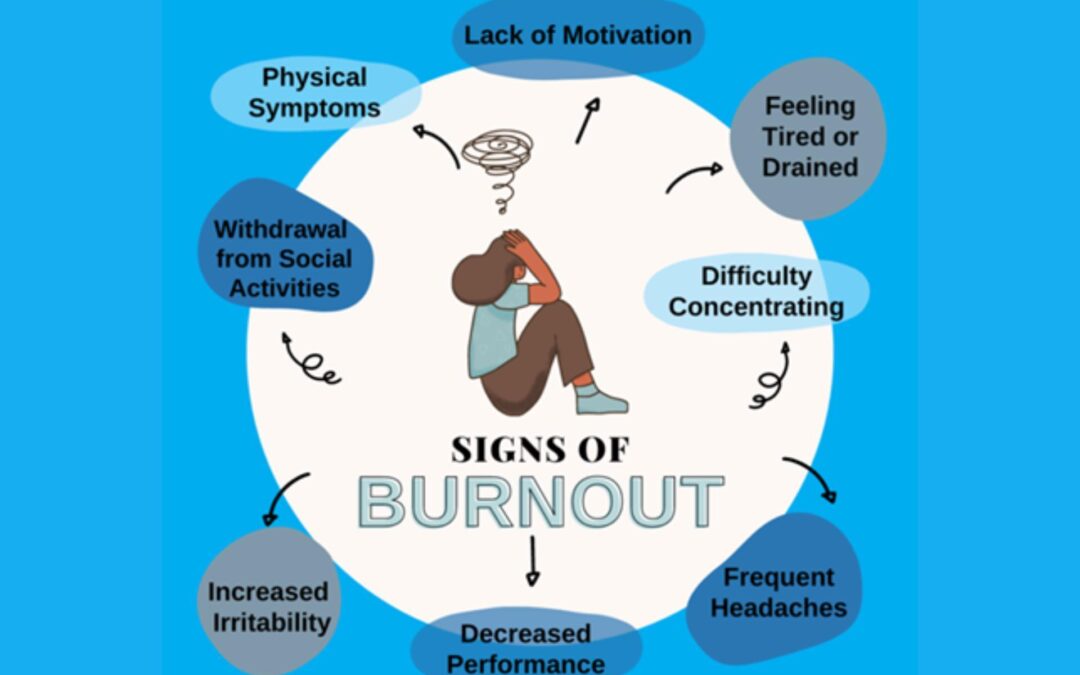
Burnout rarely appears overnight. It builds gradually. You might notice:
- Constant fatigue even after sleeping.
- Difficulty concentrating or feeling detached from your work.
- Irritability, anxiety, or loss of empathy.
- Frequent physical complaints such as headaches or stomach pain.
- A sense of emptiness or emotional flatness.
Left untreated, burnout can lead to depression, anxiety, and physical health complications. That is why early recognition is vital.
Why High Achievers Are at Risk
Ironically, those most likely to experience burnout are often the most dedicated, such as helpers, perfectionists, caretakers, and professionals in service fields. These individuals tend to push through discomfort and minimize their needs until their systems shut down. Many internalize the message that rest is earned, rather than essential. In therapy, we often explore how internalized perfectionism, people-pleasing, or trauma responses contribute to chronic overextension.
Rethinking Self-Care
In popular culture, “self-care” has become synonymous with indulgences like candles, vacations, or bubble baths. While those can be restorative, genuine self-care is far more foundational. It involves boundaries, balance, and intentional recovery. Authentic self-care looks like:
- Saying “no” when your capacity is full.
- Scheduling downtime the same way you schedule obligations.
- Seeking social support and professional help.
- Eating, sleeping, and moving your body consistently.
- Engaging in meaningful, not just efficient, activities.
- Self-care is less about escape and more about sustainability. It is how we maintain emotional regulation, cognitive clarity, and physical resilience.
The Role of Therapy
Therapy offers space to slow down, identify sources of stress, and examine the beliefs that keep your over-functioning. A counselor can help you:
- Recognize early warning signs of burnout.
- Differentiate between healthy striving and perfectionism.
- Develop coping strategies for chronic stress.
- Reconnect with intrinsic motivation and personal values.
- Treatment may involve cognitive-behavioral strategies to reframe self-critical thoughts, mindfulness to regulate physiological stress responses, or narrative approaches to help re-author one’s story from survival to restoration.
Reclaiming Rest
Rest is not a reward; it is a biological need. When your mind and body are constantly in fight-or-flight mode, they lose the ability to recharge. Proper rest includes psychological safety, which is the belief that you can pause without everything falling apart. Ask yourself:
- “What would it mean if I allowed rest without guilt?”
That question often opens the door to healing.
Final Reflection
Burnout is not the end of resilience; it is a message that your current form of resilience needs revision. Healing begins when you stop equating worth with productivity and start viewing rest as part of the work. Burnout is not a personal failure; it is your system asking for balance. When you listen, you do not just recover energy; you reclaim yourself.