Riddle me this- you sit down to meditate.
You close your eyes and try to go ‘inward’. But instead of some kind of peace, you just find statice. Your body feels far away, or maybe too close. Maybe your heart pounds or your chest feels tight. Your stomach flutters and your body buzzes with something you can’t name. You try to focus, to be mindful, to feel grounded.
In the end, you just feel more frustrated than anything.
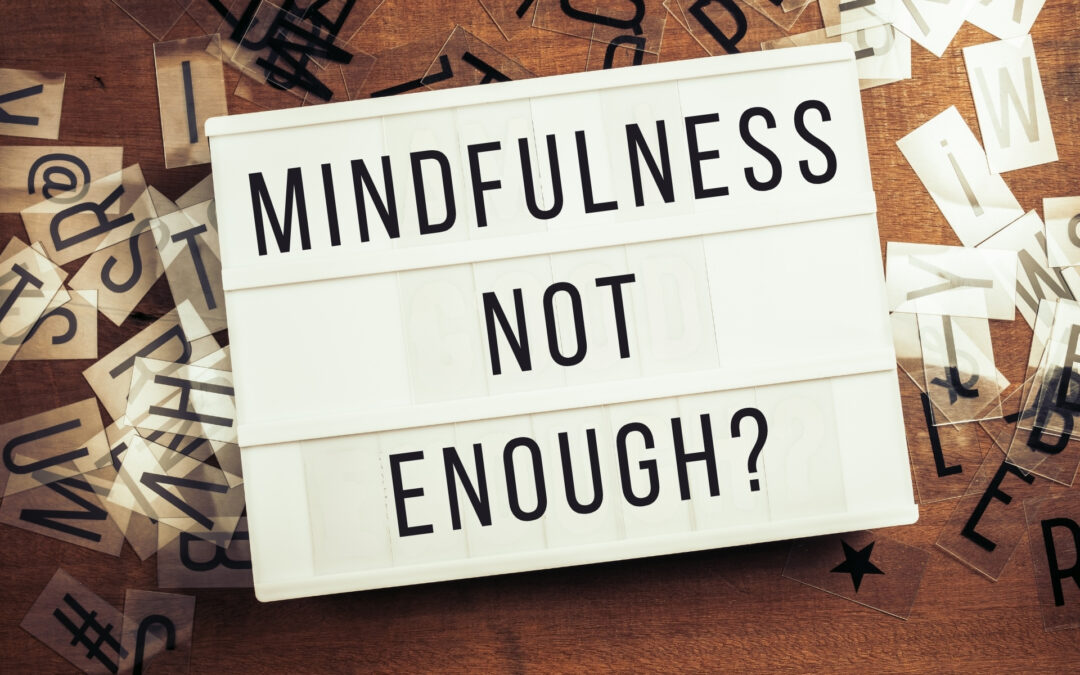
If this sounds familiar you aren’t failing at mindfulness. You may be struggling with interoception- the body’s ability to sense its own internal signals.
Interoception is the tool that helps us recognize things like hunger, tension, and comfort. For some though, internal connection can feel dull or confusing. Those with trauma histories, chronic stress, or even neurodiversity can struggle with this connection and find it overwhelming. Mindfulness asks us to notice internal sensations, but if our nervous system doesn’t yet feel safe doing so, awareness feels like too much, too soon.
The good news is that Mindfulness isn’t out of reach for you. It’s just not complete without safety.
Before we can quietly sit with ourselves, our bodies need to trust that stillness is safe. This means that we start smaller- noticing your feet on the floor, the connection of your body in the chair, or even moving before meditation. These are some somatic practices that can gently rebuild interoceptive awareness from the ground up.
So if your meditations keep “failing,” maybe the problem isn’t you. Maybe your body is asking for something more embodied, more compassionate, and more gradual than mindfulness alone.
You’re not failing at mindfulness—you’re learning how to feel again.
One breath at a time.
Signed,
A Meditation Flunky
Sam